 marciobda.com.br
Will bank payment services
- My role
- Product design, research and leadership. Continuous discovery methodology.
- Results
- Business unit break even. 8 million users served.
- My role
- Product design, research and leadership. Continuous discovery methodology.
- Results
- Business unit break even. 8 million users served.
Will Pay was a project by Will Bank to offer payment methods (such as tap to pay) with competitive rates and a great user experience to encourage loyalty, retain customers, and generate a high transaction volume for the bank.
By offering accessible card acceptance (Tap to Pay) with competitive rates and zero friction, the bank would drive primary usage, increase retention, and grow TPV (Total Payment Volume).
How it works
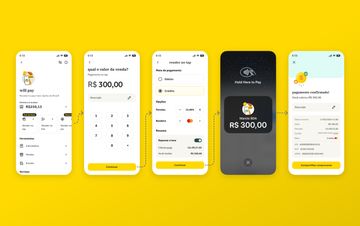
Tap-2-pay user journey
- The user sells something
- The user opens the banking app and starts a transaction
- The client touches the credit card
- The user receives the money instantly

Overview
Will Bank already had consolidated products in credit and banking business. The B.U. strategy was to discover new revenue avenues in the medium/long term.
The bank had a diversity of 8 million clients spread all over Brazil with a concentration in low income entrepreneurs living in big cities and the Northeast of the country.
One interesting data point is 78% of these users engaged in some form of informal work to earn income or supplement their formal employment, usually selling products or services for the community.
- 8MM
- bank clients
- 78%
- informal work
- Sellers
- Products and services
Exploring problems and solutions
These clients have diverse needs, but the main one related to Will Pay was being able to charge their clients using credit or debit cards. Card machines (the traditional solution) are expensive, and there are few options to solve this problem.
We created an opportunity solution tree to explore the problem space in depth. Here is a simplified version of that:
Experiments
Before committing to a solution, we created experiments to mitigate usability, value and technology risks. In total, we created 40 experiments. Here’s the ones that changed previous solutions and helped shaping the final product:
| Experiment | Type | Result |
|---|---|---|
| Tap Usability testing | Usability | Validated |
| Tap waiting list | Value | Validated |
| Payment link & Pix methods | Value | Validated |
| Home information architecture | Usability | Validated |
| Product naming | Usability | Inconclusive |
| Fraud detection | Feasibility | Validated |
| Tap as an extension app | Value | Invalidated |
| Tap inside Will bank’app | Value | Validated |
Features
Besides tap-2-pay, Will Pay aimed to provide solutions for a lot of challenges faced by clients in the day-to-day professional lives while ensuring a good experience.
The literacy and technology comprehension of clients varied greatly and that’s why every screen should be as accessible and understandable as possible.
Will Pay structure
To avoid feature creep, it was essential that Will Pay home screen guided new users to perceive and understand the payment methods, as well as provide a perfect portrait of the client current status while also creating shortcuts to the most common tasks.
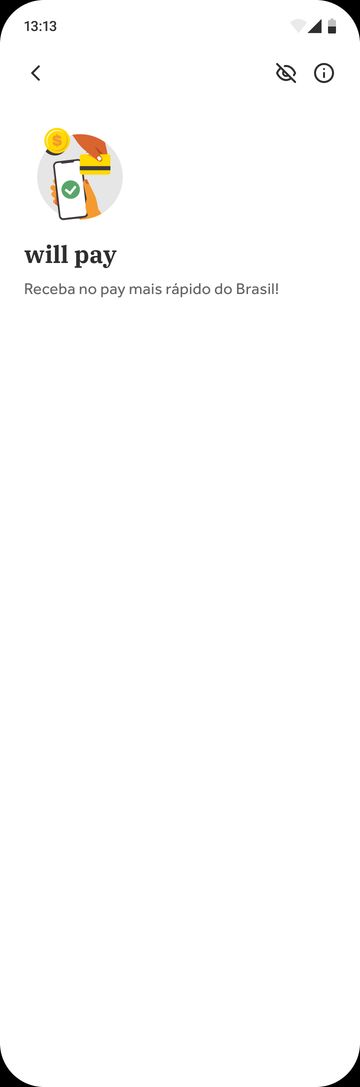



Hero
The title, subtitle and illustration ensure brand recognition. This section was also an asset modified in important company events.
To be received
Payment link and some configurations of Tap-2-pay allowed the user to receive the payment in the next business day.
In this case, a section showing the amount to be received appears in the home screen.
Payment methods
Tap-2-pay, Payment link and selling through Pix were the main actions available in the screen
Tools
Some tools were necessary to manage transactions. A calculator allowed the clients to preview fees. A dedicated sales page showed all active payment links and the statement organized all previous transactions.
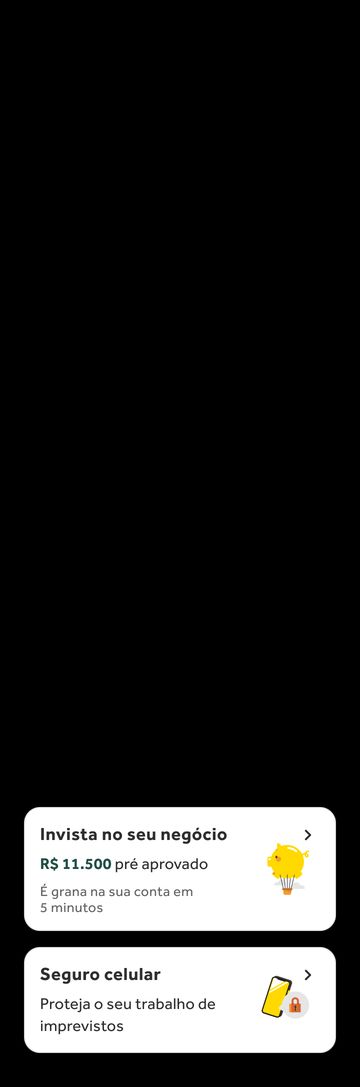
Services
In the bottom of the screen, additional services provided by third parties offered solutions like loans and insurance.
Activation
Will Pay services were available for all bank clients since the moment they activated their bank account.
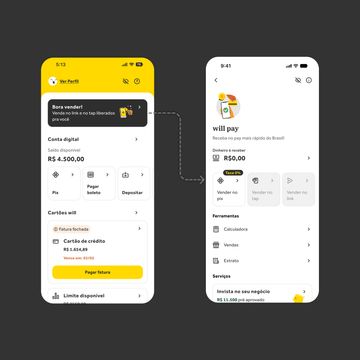
After becoming a bank's client, the user immediately gains access to the Will Pay area being able to sell products and services through Pix system.
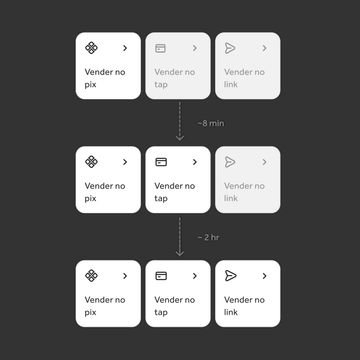
Tap-2-pay services took less than 10 minutes to be activated and the payment link was available after 2 hours.
Link
Payment links worked as a way of charging clients remotely for sellers of products or services.
For example, if a Facebook marketplace seller received a buyer’s offer for an item, the seller could send a link, so the buyer pays with credit card online before sending the item.
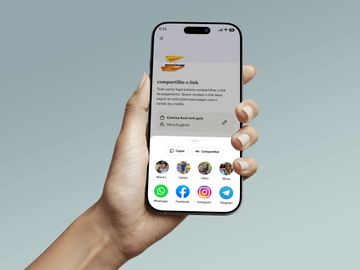
The seller creates a payment link and shares it via any messaging app.
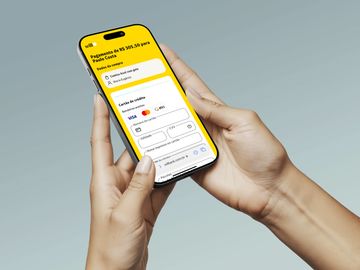
The buyer receives the link remotely and pays the transaction with a credit card.
Pix
Pix payments were also common for transactions below R$ 10,00. The buyer needed only to scan a QR code, make the payment in their bank app and the seller receives instant confirmation when the transaction succeeded.
Annotation
During the conversations with clients in the earlier prototypes, some of them brought the challenge of recording and consulting transactions. A lot of them used a notebook to write down the buyers information.
Even though creating a digital notebook didn’t change the users’ habits, adapting this solution inside Will Pay was well received by a minor, but recurrent user base.
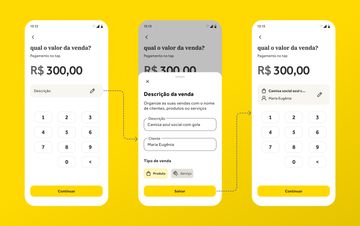
The client could add notes to each transaction, recording the buyer and the product or service description
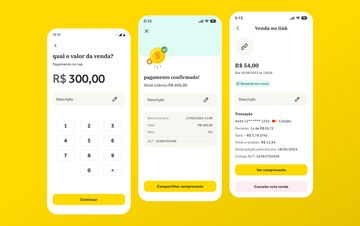
These notes could be added or changed in different points during the user journey, like transaction creation screen, transaction success screen or even when consulting the transaction details from the statement.
Statement
Multiple payment methods gave freedom for the user to choose the one that best fits each transaction. For this reason, creating a shared statement view was imperative to provide a good experience.
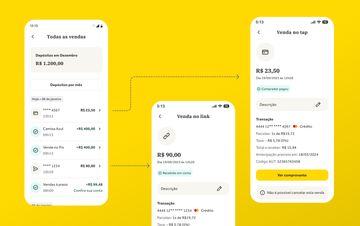
From the statement list, the user could view all details from Pix, Tap-2-pay and Payment links transactions.
Impact
Will Pay provided a way for informal sellers to charge clients with credit and debit card. We explored all the user needs and created an ecosystem to help workers improve their income. There’s a lot of client stories about how the product was essential for people bootstrapping their business and changing their lives.
- 8 million users served
- 140 thousand active users daily
- Fastest BU break-even in the company history